Translate

Tuesday, November 20, 2012

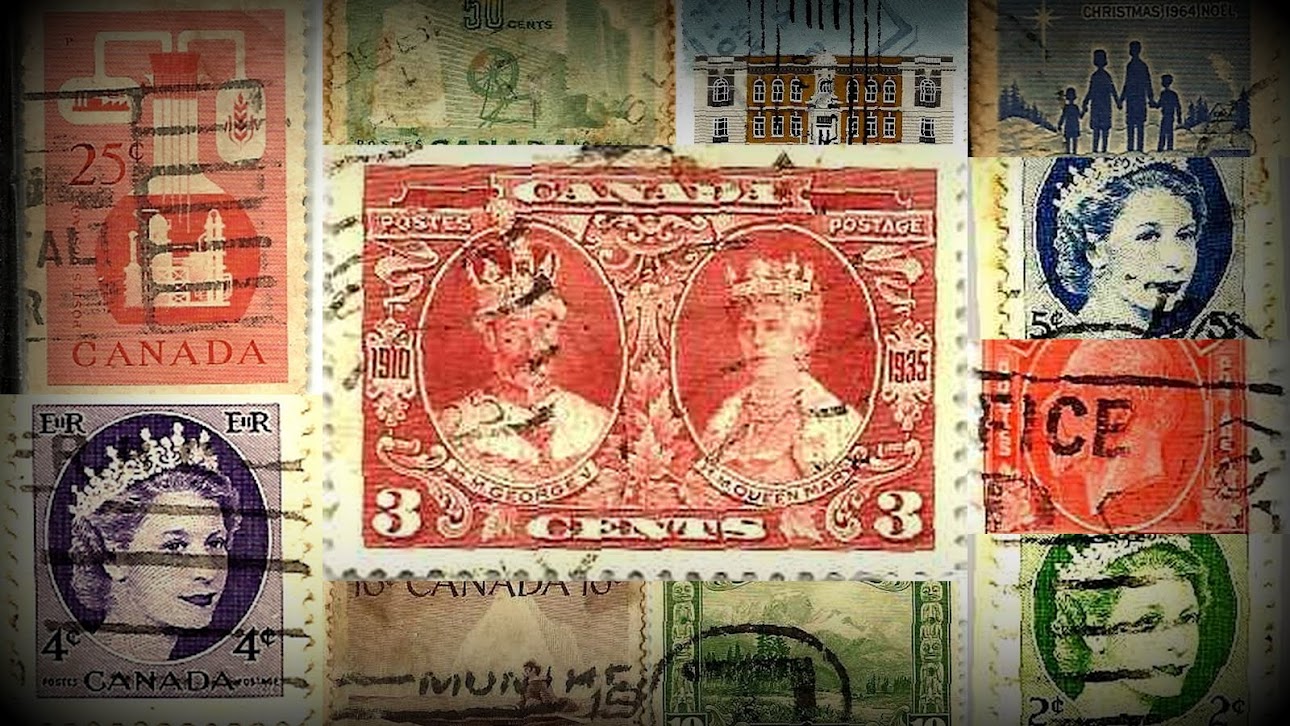
1955 Definitive Inuk & Kayak 10¢ Canada

Definitive Inuk & Kayak Canada 10¢ 1955

1955 Definitive Inuk & Kayak 10¢ Canada 

Text:           10¢ Canada Post
Condition:    Ø = used/cancelled
Title:   Eskimo in a kayak
Face value:     10
Stamp Currency:         cent
Country/area:                     Canada
Year:   1955-02-21
Set:     1955  Canoeing
Stamp number in set:           1
Basic colour:      Brown
Exact colour:       Brown White
Usage:                           Definitive
Type:               Stamp
Theme:           Canoeing
Stamp subject:   Eskimo in a kayak
NVPH number:                     
Michel number:         302
Yvert number:                         278
Scott number:                         351
Stanley Gibbons number:    477
Printing office:           Canadian Bank Note Company Ltd
Perforation:    12
Size:                            38 x 26
Watermark:     Without watermark
Paper:            
Printing:             Recess

Buy Now:        Bid Now:

Inuk & Kayak Canada

The Inuit (Inuktitut: ᐃᓄᐃᑦ, "People") are a group of culturally similar indigenous peoples inhabiting the Arctic regions of Greenland, Canada, the United States, and eastern Siberia. Inuit is a plural noun; the singular is "Inuk". The Inuit languages are classified in the Eskimo-Aleut family.
In the United States, the term Eskimo is commonly used in reference to these groups, because it includes both of Alaska's Yupik and Inupiat peoples while "Inuit" is not proper or accepted as a term for the Inupiat. No collective term exists for both peoples other than "Eskimo".
However, natives in Canada and Greenland view the name as pejorative and "Inuit" has become more common. In Canada, sections 25 and 35 of the Constitution Act of 1982 named the "Inuit" as a distinctive group of aboriginal Canadians who are not included under either the First Nations or the Métis.
The Inuit live throughout most of the Canadian Arctic and subarctic in the territory of Nunavut; "Nunavik" in the northern third of Quebec; "Nunatsiavut" and "Nunatukavut" in Labrador; and in various parts of the Northwest Territories, particularly around the Arctic Ocean. These areas are known in Inuktitut as the "Inuit Nunangat". In the United States, Inupiat live on the North Slope in Alaska and on Little Diomede Island. In Russia, they live on Big Diomede Island. The Greenlandic Inuit are the descendants of migrations from Canada and are citizens of Denmark, although not of the European Union.

In the United States, the term "Eskimo" is commonly used, because it distinguished both Yupik and Inupiat peoples from other native Americans. The Yupik do not speak an Inuit language or consider themselves to be Inuit. However, as the term is a—probably Montagnais– exonym and has been widely folk etymologized as meaning "eater of raw meat" in Cree, it has become considered a pejorative or even racial slur among Canadian and English-speaking Greenlandic Inuit.
In Canada and Greenland, "Inuit" is preferred. Inuit is the Eastern Canadian Inuit (Inuktitut) and West Greenlandic (Kalaallisut) word for "People". Since Inuktitut and Kalaallisut are the prestige dialects in Canada and Greenland, respectively, their version has become dominant, although every Inuit dialect uses cognates from the Proto-Eskimo *ińuɣ – for example, "people" is inughuit in North Greenlandic and iivit in East Greenlandic.

Kayak


The natives hunted sea animals from single-passenger, covered seal-skin boats called qajaq (Inuktitut syllabics: ᖃᔭᖅ) which were extraordinarily buoyant, and could easily be righted by a seated person, even if completely overturned. Because of this property the design was copied by Europeans, and Americans who still produce them under the Inuit name kayak.

Monday, November 19, 2012

1956 Industry Definitive chemical industry 25¢ Canada

Industry Definitive chemical industry Canada  25¢ 1956


1956 Industry Definitive chemical industry 25¢ Canada    

Text:           25¢ Canada Post
Condition:    Ø = used/cancelled
Title:   Chemical Industry
Face value:     25
Stamp Currency:         cent
Country/area:                     Canada
Year:   1956-06-07
Set:     1956  Industry
Stamp number in set:           1
Basic colour:      Red
Exact colour:      
Usage:                           Definitive
Type:               Stamp
Theme:           Industry, Chemical Industry
Stamp subject:   Chemical Industry
NVPH number:                     
Michel number:         CA 310
Yvert number:                         290
Scott number:                         363
Stanley Gibbons number:    489
Printing office:          
Perforation:    12
Size:                           
Watermark:    
Paper:            
Printing:            

Buy Now:        Bid Now:

Chemical Industry


Chemical societies first appeared in Canada in 1902 with the McGill Chemical Society, Montréal, and the Canadian section of the Society of Chemical Industry (UK), Toronto. Over 100 people attended the first national conference in Ottawa in 1918, which led to formation of the first national society, The Canadian Institute of Chemistry (1921). The institute amalgamated with other groups in 1945 to form a new national scientific society, The Chemical Institute of Canada (CIC). By 1993 the CIC embraced 4500 chemists, 1550 chemical engineers, and 500 chemical technologists. The CIC is an umbrella organization for constituent societies: the Canadian Society for Chemical Engineering (est. 1966), the Canadian Society for Chemical Technology (est. 1973), and the Canadian Society for Chemistry (est. 1985).

Three separate societies in Ontario, Québec and Alberta represent the nonscientific interests of chemists in provincial matters. Canadian chemists are also well served professionally by a number of journals. The Canadian Journal of Research was founded by the NRC in 1929 to publish original work in all sciences. Later, it was succeeded by several journals serving different disciplines, eg, the Canadian Journal of Chemistry, Canadian Journal of Biochemistry and Cell Biology and The Canadian Journal of Technology. The latter was transferred to the CIC (and subsequently to the SCLE) in 1956 and renamed the Canadian Journal of Chemical Engineering. The CIC publishes a journal for general chemical news, Chemistry in Canada, which was founded in 1949 and renamed Canadian Chemical News in 1984. See also CHEMISTRY SUBDISCIPLINES.

Thursday, November 15, 2012

1964 Christmas Star of Bethlehem 5¢ Canada

Christmas Star of Bethlehem Canada 5¢ 1964

1964 Christmas Star of Bethlehem 5¢ Canada 

Text:           5¢ Canada Post  Christmas  1964 Noel
Condition:    Ø = used/cancelled
Title:   Christmas  1964
Face value:     5
Stamp Currency:         cent
Country/area:                     Canada
Year:   1964-10-14
Set:     1964  Christmas 
Stamp number in set:           1
Basic colour:      Blue
Exact colour:      
Usage:                           Definitive
Type:               Stamp
Theme:           Christmas , Religion
Stamp subject:   Christmas  1964
NVPH number:                     
Michel number:         CA 380
Yvert number:                         360a
Scott number:                         435
Stanley Gibbons number:   
Printing office:          
Perforation:    L 12
Size:                20 x 17           
Watermark:    
Paper:            
Printing:             Recess
Buy Now:        Bid Now:

I. Star of Bethlehem Background


Many theories have been espoused to explain the “Star of Bethlehem” which identified the child Jesus as mentioned in Matthew 2: 1-12:
After Jesus was born in Bethlehem in Judea, during the time of King Herod, Magi from the east came to Jerusalem and asked, “Where is the one who has been born king of the Jews? We saw his star when it rose and have come to worship him.

II. Larsen’s Theory of the Bethlehem Star


In 3/2 BC, Jupiter’s retrograde wandering would have called for our magus’ full attention. After Jupiter and Regulus had their kingly encounter, Jupiter continued on its path through the star field. But then it entered retrograde. It “changed its mind” and headed back to Regulus for a second conjunction. After this second pass it reversed course again for yet a third rendezvous with Regulus, a triple conjunction. A triple pass like this is more rare. Over a period of months, our watching magus would have seen the Planet of Kings dance out a halo above the Star of Kings. A coronation.
By the following June, Jupiter had finished crowning Regulus. The Planet of Kings traveled on through the star field toward another spectacular rendezvous, this time with Venus, the Mother Planet. This conjunction was so close and so bright that it is today displayed in hundreds of planetaria around the world by scientists who may know nothing of the Messiah. They do it because what Jupiter did makes such a great planetarium show. Jupiter appeared to join Venus. The planets could not be distinguished with the naked eye. If our magus had had a telescope, he could have seen that the planets sat one atop the other, like a figure eight. Each contributed its full brightness to what became the most brilliant star our man had ever seen. Jupiter completed this step of the starry dance as it was setting in the west. That evening, our Babylonian magus would have seen the spectacle of his career while facing toward Judea.

III. The Three Wise Men—Daniel’s Magi?


Basically, the cult of the Magussaeans was a combination of heretical Zoroastrianism and Babylonian astrology. When Cyrus the Great conquered the great city of Babylon in the sixth century BC, the Magi came into contact with the teachings of the city’s astrologers, known as Chaldeans. According to Diodorus of Sicily, a Greek historian of 80 to 20 BC, and author of a universal history, Bibliotheca historica:
...being assigned to the service of the gods they spend their entire life in study, their greatest renown being in the field of astrology. But they occupy themselves largely with soothsaying as well, making predictions about future events, and in some cases by purifications, in others by sacrifices, and in others by some other charms they attempt to effect the averting of evil things and the fulfillment of the good. They are also skilled in the soothsaying by the flight of birds, and they give out interpretations of both dreams and portents. They also show marked ability in making divinations from the observations of the entrails of animals, deeming that in this branch they are eminently successful.
In addition, the sixth century BC is also known in Jewish history as the Exile, when their entire population was located in the city, having been removed to there by Nebuchadnezzar, at the beginning of the century, after he had destroyed Jerusalem. Having become substantial citizens, with some achieving minor administrative posts, it is possible the Jews also contributed to this development. In fact, in the Book of Daniel, Chapter 2:48, Daniel is made chief of the “wise men” of Babylon, that is of the Magi or Chaldeans. In any case, scholars have certainly recognized that the later teachings referred to collectively as the esoteric Kabbalah, seem to have been a combination of Magian and Chaldean lore. Astrology was not a component of mainstream Zoroastrianism, and those who incorporated its concepts into their version of the faith seem to have been regarded as heretical.

IV. Jewish Star Signs—Heavenly Astronomy


Some significant truths from the Bible indicate a relationship between the constellation of stars and God’s early prophetic revelation of the gospel to man. Long before written records were in use, the prophetic outline of the great plan of redemption was signified in the star groups and in the names of individual stars.

Conclusion


Believers can rest assured in revelation and that there is a strong connection between creation and God. He sometimes uses heavenly bodies to send a message to His people. This is stated in Psalm 19:1-4:
The heavens declare the glory of God;
And the firmament shows His handiwork.
Day unto day utters speech,
And night unto night reveals knowledge.
There is no speech nor language
Where their voice is not heard.
Their line has gone out through the earth

But whatever one believes explains such phenomenon as the Star of Bethlehem, Christmas is worthy of celebration for its message of God coming down to earth as man to save all mankind. And this can never change.


1982 Queen Elizabeth II 30¢ Canada

Queen Elizabeth II Canada 30¢ 1982

1982 Queen Elizabeth II 30¢ Canada 

Text:           30¢ Canada Post  
Condition:    Ø = used/cancelled
Title:   Queen Elizabeth II  
Face value:     30
Stamp Currency:         cent
Country/area:                     Canada
Year:   1982-05-11
Set:     1982  Queen Elizabeth II 
Stamp number in set:           1
Basic colour:      Multi-coloured
Exact colour:      
Usage:                           Definitive
Type:               Stamp
Theme:           Queen, Head of States
Stamp subject:   Queen Elizabeth II 
NVPH number:                     
Michel number:         830
Yvert number:                         796
Scott number:                         791
Stanley Gibbons number:   
Printing office:          
Perforation:    13 x 13½
Size:                21 x 25 mm
Watermark:    
Paper:            
Printing:            

Buy Now:        Bid Now:

Queen Elizabeth II Canada  1982


Her 15 tours and stays in Canada were in 1951 as Princess, 1957, 1959, 1964, 1967, 1970, 1971, twice in 1973, 1976, 1977, 1978, 1982, 1983 and 1984, as well as four stop-overs. As a result of those visits she has brought hundreds of small Canadian communities and groups which ordinarily go unnoticed to national and often international attention.
As the personification of our history, she has presided over and endured the success of numerous Canadian anniversaries and national occasions. They include the centenary of the Confederation Conference in 1964, the centenary of Confederation in 1967, the provincial centenaries of Manitoba in 1970, British Columbia in 1971, and Prince Edward Island in 1973, and the bicentenaries of Ontario and New Brunswick in 1984. She opened the St. Lawrence Seaway in 1959 and the Montreal Olympics in 1976. In 1983, from Vancouver, she invited the people of the world to visit Expo 86. That was a proud moment. She opened Parliament in 1957, the first monarch to do so, and again in 1977. In 1967 she addressed both Houses.


1983 Queen Elizabeth II 32¢ Blue Canada

Queen Elizabeth II Canada 32¢ Blue 1983

1983 Queen Elizabeth II  32¢ Blue Canada

Text:           32¢ Canada Post  
Condition:    Ø = used/cancelled
Title:   Queen Elizabeth II 
Face value:     32
Stamp Currency:         cent
Country/area:                     Canada
Year:   1983-05-24
Set:     1983  Queen Elizabeth II 
Stamp number in set:           1
Basic colour:      Multi-coloured
Exact colour:      
Usage:                           Definitive
Type:               Stamp
Theme:           Queen, Head of States
Stamp subject:   Queen Elizabeth II 
NVPH number:                     
Michel number:         CA 873
Yvert number:                         837
Scott number:                         792
Stanley Gibbons number:    896 C
Printing office:          
Perforation:    13 x 13½
Size:                20 x 24 mm
Watermark:    
Paper:            
Printing:            

Buy Now:        Bid Now:

Queen Elizabeth II Canada  1983


Her 15 tours and stays in Canada were in 1951 as Princess, 1957, 1959, 1964, 1967, 1970, 1971, twice in 1973, 1976, 1977, 1978, 1982, 1983 and 1984, as well as four stop-overs. As a result of those visits she has brought hundreds of small Canadian communities and groups which ordinarily go unnoticed to national and often international attention.

As the personification of our history, she has presided over and endured the success of numerous Canadian anniversaries and national occasions. They include the centenary of the Confederation Conference in 1964, the centenary of Confederation in 1967, the provincial centenaries of Manitoba in 1970, British Columbia in 1971, and Prince Edward Island in 1973, and the bicentenaries of Ontario and New Brunswick in 1984. She opened the St. Lawrence Seaway in 1959 and the Montreal Olympics in 1976. In 1983, from Vancouver, she invited the people of the world to visit Expo 86. That was a proud moment. She opened Parliament in 1957, the first monarch to do so, and again in 1977. In 1967 she addressed both Houses.

Sunday, November 11, 2012

1985 Queen Elizabeth II 34¢ Blue Canada

Queen Elizabeth II Canada 34¢ Blue 1985

1985 Queen Elizabeth II 34¢ Blue Canada

Text:           34¢ Canada Post  
Condition:    Ø = used/cancelled
Title:   Queen Elizabeth II 
Face value:     34
Stamp Currency:         cent
Country/area:                     Canada
Year:   1985-07-12
Set:     1985  Queen Elizabeth II 
Stamp number in set:           1
Basic colour:      Blue
Exact colour:      
Usage:                           Definitive
Type:               Stamp
Theme:           Queen, Head of States
Stamp subject:   Queen Elizabeth II 
NVPH number:                     
Michel number:         CA 967
Yvert number:                         914
Scott number:                         926
Stanley Gibbons number:    1161
Printing office:          
Perforation:    13 x 13½
Size:                20 x 24 mm
Watermark:    
Paper:            
Printing:            

Buy Now:        Bid Now:

Queen Elizabeth II Canada  1985


Title and style of the Canadian monarch

The title and style of the Canadian sovereign is the formal mode of address of the monarch of Canada. The form is based on those that were inherited from the United Kingdom and France, used in the colonies to refer to the reigning monarch in Europe. As the possession of various Canadian territories changed ownership and then the country gained gradual independence, the style and title of the monarchs changed almost as often at the kings and queens themselves. The mode of address currently employed is a combination of a style that originates in the early 17th century and a title established by Canadian law in 1953.


Title of the monarch

Further information: List of titles and honours of Queen Elizabeth II
The monarch's title is set out by the Royal Style and Titles Act, passed by the Canadian parliament in 1953, a year following the accession of Princess Elizabeth, Duchess of Edinburgh, to the throne as Queen Elizabeth II, and granted Royal Assent the day before her coronation. It was later amended in 1985, and sets out the sovereign's title as, in English:

“Elizabeth the Second, by the Grace of God of the United Kingdom, Canada and Her other Realms and Territories Queen, Head of the Commonwealth, Defender of the Faith.”

And in French:

“Elizabeth Deux, par la grâce de Dieu Reine du Royaume-Uni, du Canada et de ses autres royaumes et territoires, Chef du Commonwealth, Défenseur de la Foi.”

The title was composed to distinctly mention Canada so as to highlight the monarch's shared status, being both Queen of Canada and, separately, Queen of the United Kingdom, as well as of then six other Commonwealth realms (today 14); with emphasis showing the distinct title Queen of Canada as embedded in the longer formal title: Elizabeth the Second, by the Grace of God of the United Kingdom, Canada and Her other Realms and Territories Queen, Head of the Commonwealth, Defender of the Faith. When composed in 1953, this format was consistent with the monarch's titles in all her other realms; after 40 years of Elizabeth's reign, however, only Canada and Grenada retained this title, all others, aside from the UK, having dropped the reference to the United Kingdom. The sovereign will allude to herself as Queen of Canada when in or acting abroad on behalf of that country. For example, Elizabeth II said in 1973: "...it is as Queen of Canada that I am here, Queen of Canada and of all Canadians, not just of one or two ancestral strains." Since the title was adopted, the federal government has promoted its use as a signifier of Canada's sovereign and independent status; Prime Minister John Diefenbaker said of the title in 1957: "The Queen of Canada is a term which we like to use because it utterly represents her role on this occasion." The title is also included in the Oath of Allegiance, which forms a part of the Oath of Citizenship, and can be found as ELIZABETH II DEI GRATIA REGINA CANADA— Latin for Elizabeth II, by the Grace of God, Queen of Canada— on the obverse of various medals in the Canadian honours system..


1994 Court House in Yorkton, Saskatchewan $1 Canada

Court House in Yorkton, Saskatchewan Canada  $1 1994


1994 Court House in Yorkton, Saskatchewan $1 Canada
Text:           1$ Canada Post  
Condition:    Ø = used/cancelled
Title:   Court House, Yorkton 
Face value:     1
Stamp Currency:         $
Country/area:                     Canada
Year:   1994-02-21
Set:     1994  Architecture
Stamp number in set:           1
Basic colour:      Multicolour
Exact colour:      
Usage:                           Definitive
Type:               Stamp
Theme:           Architecture
Stamp subject:   Architecture
NVPH number:                     
Michel number:         CA 1403
Yvert number:                         1354
Scott number:                         1375
Stanley Gibbons number:    1161
Printing office:          
Perforation:    14 x 14½
Size:               
Watermark:    
Paper:            
Printing:            

Buy Now:        Bid Now:

February 21, 1994 saw the release of two high-value Architecture stamps: a $1 Court House and $2 Provincial Normal School.
What was special about these two stamps? They were printed by Leigh-Mardon Pty Limited ... of Australia!
Both values were reissued a year later, on February 20, 1995. This time the printer was the Canadian Bank Note Company.
The above would imply that there were only two printings of each stamp. Wrong! As we will see, there were three printings of the $1 value and four printings of the $2 value.
By studying these stamps with the aid of an ultraviolet light, different "glows" of the front of the building can be seen, which proves that multiple printings were made.

$1 Court House


The $1 value pictures the Court House in Yorkton, Saskatchewan. The central portion of the front of the building is a brown colour while the left and right ends are grey-coloured.


By "lamping" (studying stamps under an ultraviolet light in a dark room) the Leigh-Mardon printing of this stamp, two different "glows" can be seen on the central portion of the building, as listed here:

Printer
Perf
Glow
Estimate
LM
14.6 x 14
glows orangy
67%
LM
14.6 x 14
glows copper
7%
CBN
13.3 x 13
-
26%

This shows that three different printings exist, two by LM and the one by CBN. Also notice that the second printing by LM is relatively scarce.

Court House in Yorkton, Saskatchewan Canada


Many of Saskatchewan’s most impressive public buildings were designed by its second Provincial Architect, Maurice William Sharon. Sharon was born in St. Thomas, Ontario on November 1, 1875. He graduated from the School of Practical Science (now the University of Toronto’s Faculty of Applied Science and Engineering), and then apprenticed six years in architects’ offices. Arriving in Regina in 1906, he was first employed by the province as a cartographer and has been credited with drawing the first official map of the new province. He subsequently went into an architectural partnership with a former employer, Neil R. Darrach. Sharon and Darrach’s Regina works include Westminster United Church, the Donahue Block, and the Guaranty/Western Trust Building.
Sharon’s tenure as Provincial Architect from 1916 to 1930 coincided with the province’s boom years. Among his works are the Saskatchewan Hospital at Weyburn, the Provincial NORMAL SCHOOL at Saskatoon, and the 1928 ballroom addition to GOVERNMENT HOUSE, Regina. However, his most distinctive and prominent designs are several elegant court houses. Yorkton Court House, a Provincial Heritage Property, is an example of the Beaux Arts style; it was featured on the $1 stamp of Canada Post’s Canadian Architectural Heritage series. Estevan Court House (also a Provincial Heritage Property) is considered Saskatchewan’s finest example of the Colonial style, exhibiting a symmetric design and fine detailing in stone and brick. Sharon’s other Colonial courthouse designs are Assiniboia and Weyburn (both Provincial Heritage Properties), Gravelbourg, Kerrobert, Melfort, Prince Albert, Shaunavon, and Wynyard.
Sharon was active in the formation of the Saskatchewan Association of Architects in 1912 and served two terms as its president. A Liberal supporter, Sharon lost his position as Provincial Architect following the election of the Conservative government in 1929. He spent his remaining years in BC, where his few subsequent works have all since been demolished. The excellence of his architectural capabilities is perhaps best attested to by the fact that many of Maurice Sharon’s buildings are still standing almost a century later, and over a dozen of them have been formally designated as Municipal or Provincial Heritage Properties. Maurice Sharon died September 8, 1940.